

Should you stop your dog humping pillows, Teddy bears and blankets?
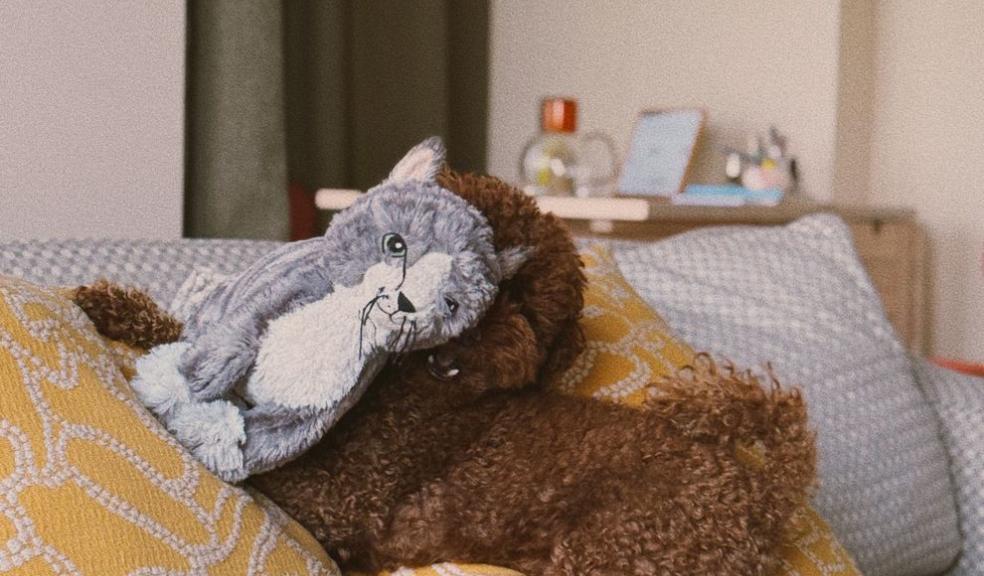
Whether it's a favourite teddy bear, a sofa cushion or a pile of blankets, many dog owners have witnessed their pet humping household objects and immediately wondered whether they should stop them.
According to Jo Hinds, COAPE-certified Behaviourist and Dynamic Dog Practitioner at fresh dog food brand Years, the answer depends entirely on why your dog is doing it.
"Humping isn't a bad behaviour, in many cases, it's completely normal," says Jo.
"The important thing is understanding what's driving it. If it's happening occasionally and your dog is otherwise relaxed and healthy, it's usually nothing to worry about. However, if it becomes obsessive, difficult to interrupt or starts affecting their quality of life, it's worth investigating further."
One of the biggest misconceptions, she says, is that mounting is always sexual behaviour.
"People often assume their dog is sexually frustrated, but that's rarely the whole story. Dogs hump for lots of different reasons, including excitement, stress, frustration, boredom and even because the behaviour has simply become rewarding over time."
Rather than focusing on the object itself, Jo says owners should look at what happened immediately beforehand.
"If your dog grabs a cushion after visitors arrive, after a walk or during an exciting game, it's often a way of releasing built-up emotion.
Dogs don't always know how to regulate excitement or stress, so behaviours like zooming around the house, excessive licking and mounting can all be different ways of coping."
Five Reasons Your Dog Might Be Humping Household Objects
They're overexcited
"Excitement is one of the biggest triggers. After visitors arrive, during energetic play or after something particularly stimulating, some dogs release that excess emotion by mounting nearby objects."
They're feeling stressed
"Changes to routine, unfamiliar people, loud environments or other sources of anxiety can sometimes trigger mounting as a coping behaviour."
They’re needs are not being fully met
“Dogs need appropriate opportunities to express natural behaviours, explore, rest and interact with their environment.”
They've learned it gets connection
"If everyone laughs, shouts or rushes over whenever your dog starts mounting something, they may quickly learn that it's an effective way to get a reaction."
They have an itch!
“Sometimes mounting can be linked to itching. Certain breeds, particularly those with flatter faces or compact body shapes, may have more difficulty reaching or grooming some areas of their body.”
It's become a habit
"Like many behaviours, repetition strengthens the habit. If it's repeatedly practised, it can simply become part of your dog's routine."
So when should owners step in?
“Before trying to stop the behaviour, observe the pattern. Keeping a simple diary of when it happens, what happened beforehand, how your dog was feeling and how easily they can disengage can help identify whether the behaviour is linked to excitement, stress, frustration, tiredness or habit.
If intervention is needed, the aim should be to help your dog regulate their emotions rather than simply focusing on stopping the behaviour. Calmly creating space, offering an alternative activity, or helping them move away from the trigger can be more effective than repeatedly interrupting the behaviour.
“If mounting occurs around a trigger, such as visitors, other dogs or stressful situations, helping the dog feel safer by increasing distance and reducing pressure is usually more helpful than repeatedly asking them to stop.”
She also advises owners to seek veterinary advice if the behaviour suddenly becomes excessive or is accompanied by excessive licking, discomfort or changes around the genitals, as this could indicate an underlying medical issue.
"For most dogs, humping a pillow or teddy every now and then is simply another way to help regulate themselves" Jo adds.
"It's not usually something owners need to panic about. The goal shouldn't be to stop every instance of mounting. It should be to understand what your dog is trying to tell you."